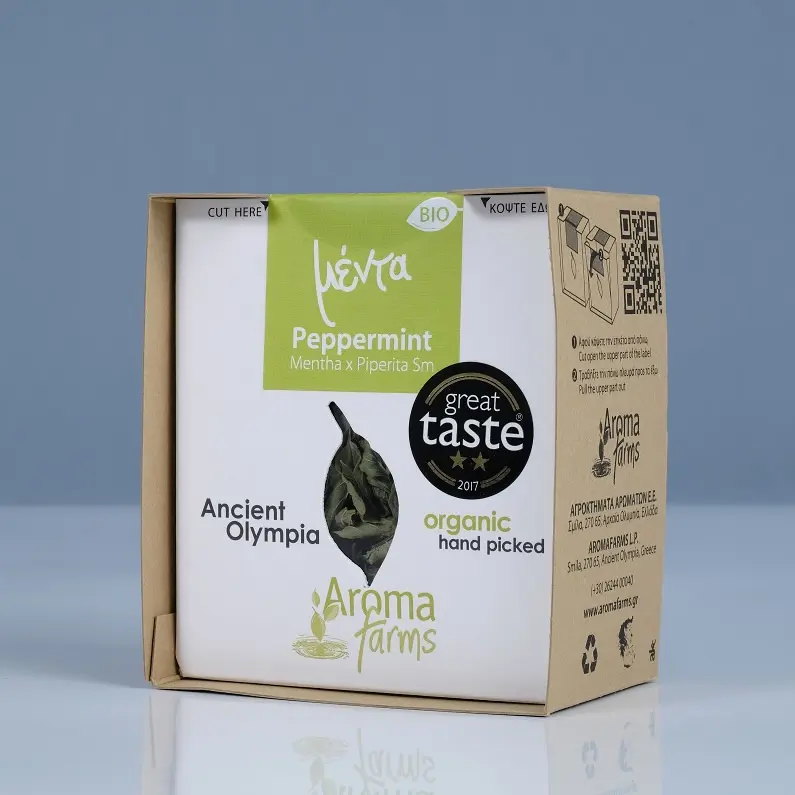
Mint has a distinctive refreshing, peppery flavor. In cooking, it pairs well with rice, vegetables, salads, seafood marinades, pasta, sauces, and soups. You can also try the classic English recipe of lamb with mint sauce. However, mint should be added at the end of cooking, as prolonged heat can cause it to lose its aroma.
Mint is also used in desserts, liqueurs, and refreshing herbal infusions.
Traditionally, mint tea is used to relieve colds, laryngitis, and nasal congestion through inhalation, as it is rich in menthol—a natural phytochemical compound.
It is considered a classic stimulant and aphrodisiac. The cooling sensation it produces can even boost metabolism, especially when used topically on the skin. Thanks to its muscle-relaxing properties, mint may help alleviate gastrointestinal discomfort, reduce anxiety, ease menstrual pain, and support the regulation of irregular cycles.